September 2026
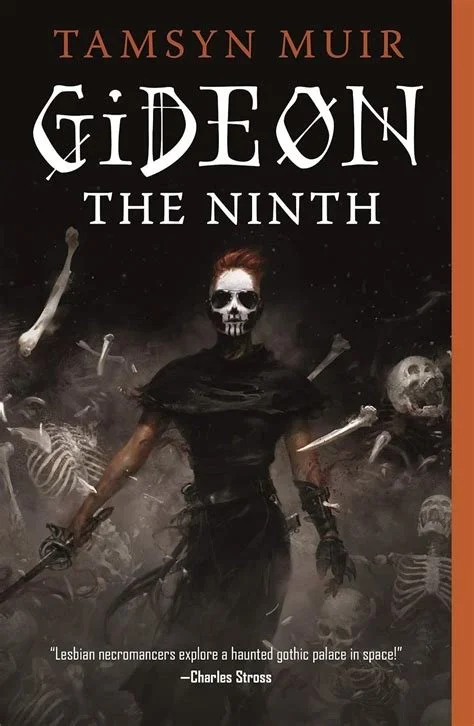
The Locked Tomb
Lesbian Necromancers in Space!
What more do you need to know, really? I have nothing but praise for these books. Tamsyn Muir has immediately become one of my favorite authors, and I am eagerly watching for the release of the fourth book in this series. These books do effortlessly what so many sci-fi and fantasy novels attempt and fall short of: genuinely clever, quick-witted humor. I would read five more books about every character in Gideon the Ninth, even the evil ones. I will say, though, that those who are put off by death and gore will unfortunately have to miss out on Muir’s brilliant writing, as there are some pretty gnarly bits (which only improved the experience for me, frankly). Bone corsets, sapphic yearning, knee-deep sarcasm, and a surprising amount of Kiwi slang—What more could you want? Goth is cool again.
July 2026
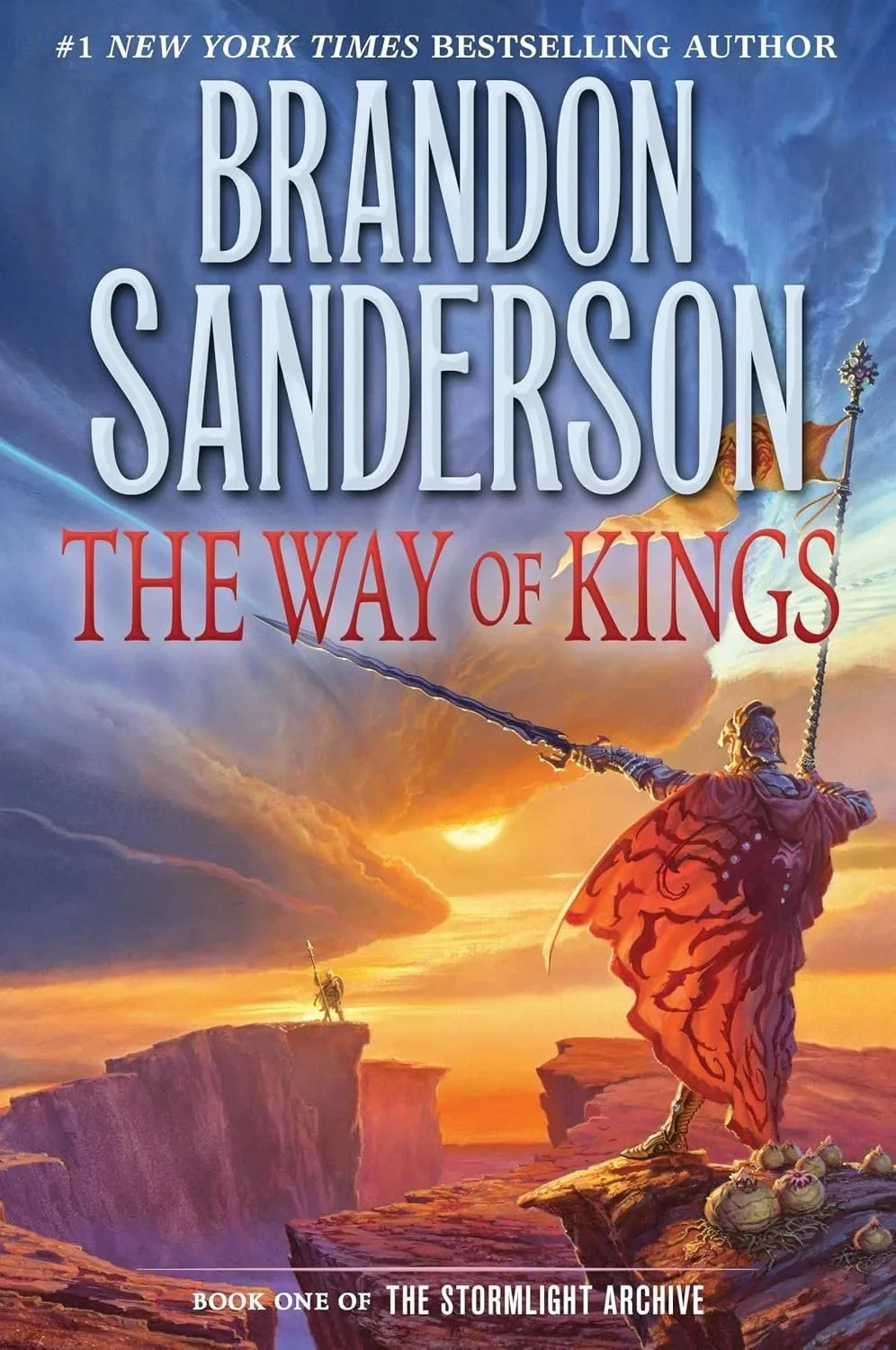
The Stormlight Archives
Is Brandon Sanderson “Boys’ Fantasy”?
That’s what the women in my writing group called Sanderson when I told them I was finally giving into the hype and picking up one of his novels. I wasn’t sure what that meant, exactly, though I had to admit that my only friend who was passionate about Sanderson was, in fact, a man. I had some expectations—we have doubtless all read novels where women were written with the kind of stunning lack of understanding and realism that makes you think ugh, another one of those male authors.
I didn’t find that to be the case with Sanderson when I read The Stormlight Archives. I could tell he genuinely tried to develop his female characters as much as the men, and they even seemed to get close to an equal amount of attention. I don’t know that any of those women would have passed the Bechdel test, frankly, but I certainly didn’t find them to be the busty cardboard cutouts of women that are so often found in male-authored fantasy novels.
No, what made me decide that I was not a Sanderson fan wasn’t anything objectionable, or even bad, per se; it was that his writing seemed so basic. Before reading any of his work, I knew of Sanderson, as every reader does in 2026, as a giant in the fantasy world. I had seen him in every bookstore and at the top of the charts on Goodreads; my expectations were not low. And while I did enjoy the first few books of The Stormlight Archives, I was genuinely surprised to find—and hear me out, Sanderson fans—that the writing itself was just very . . . plain. I couldn’t help but compare the first book, The Way of Kings, to the last long epic fantasy I had read, Samantha Shannon’s Priory of the Orange Tree. In that series, Shannon’s writing is beautifully crafted, almost poetic. I found myself pausing every few chapters to linger on a line that felt particularly brilliant, often a metaphor I would never have thought to make. In The Way of Kings, on the other hand, I was taken aback by the simplicity of his actual writing. There were very few metaphors, no poetic turns of phrase; all the emotion he tried to convey seemed to fall short. When I stopped to reread a sentence, it was always because I was confused about the antecedent, not because I was enchanted with the wordplay. Despite technically having depths, something about the way the characters were portrayed felt unrealistic and one-dimensional.
I came to realize that Sanderson’s strength lies not in his actual writing, but in his worldbuilding. The Way of Kings did hook me, because I was curious about how this complex, detailed world worked, and wanted to know more (and it really does take you about nine hundred pages to figure out what’s going on). The problem with this is that once you learn just about everything there is to know about the universe—say, by book three—there’s no longer an incentive to keep reading. And I did, in fact, find myself less and less motivated to pick the books back up as I went on.
In the introduction to Ursula K. Le Guin’s The Left Hand of Darkness, she describes a kind of “extrapolative” science fiction that focuses on predicting what the future will look like, rather than using a futuristic setting to explore ideas about the current world, as Le Guin tries to do. This concept, I think, applies to fantasy as well—some authors put more emphasis on creating a quote-unquote “realistic” world than they do on exploring the human mind and the intricacies of society. This is not to say that those “extrapolative” or world-building focused novels are lesser—while Le Guin seems to look down on books that are “escapist,” I don’t think there’s anything wrong with reading a story just for entertainment. Clearly Sanderson is beloved by millions for a reason. However, reading that essay, and comparing Sanderson and Shannon, I realized that I had never read a sci-fi or fantasy novel written by a woman that focused more on the world than on the characters. I could think of plenty of examples of male authors with similar approaches to Sanderson, but no women, though I’m sure some are out there. I wondered if this was what my friends calling Sanderson “boy fantasy.” But at the same time, there is certainly no dearth of male authors who weave compelling illustrations of social constructs and psychologies through their fiction.
What do you think? Have you noticed any trends across sci-fi and fantasy written by people of different genders? Have you read Brandon Sanderson’s work, and what did you like or dislike about it?
I am always looking for more book recommendations! Please send them my way at lspsimon12@gmail.com (or ask for some recommendations of your own—turnabout is fair play!)